
Spring in Central Virginia can feel calm one day and completely saturated the next. By the time summer storms roll in, many homeowners start noticing the same problems over and over again – standing water, soggy grass, runoff washing out mulch, and areas of the yard that never seem to dry out.
Drainage issues rarely fix themselves. In fact, they usually get worse as the season goes on.
If your yard struggled last year, now is the time to address it before heavy rain becomes consistent. A few targeted improvements can make a significant difference in how your property handles water all summer long.
Why Drainage Problems Show Up This Time of Year
Drainage issues tend to become obvious in late spring and early summer for a few reasons.
The soil is already holding moisture from earlier rain. Grass is actively growing and competing for nutrients. Storms start coming in heavier bursts rather than light, steady rain.
When all of that combines, water has nowhere to go.
In many Central Virginia yards, clay-heavy soil makes this even more noticeable. Clay does not drain quickly, which means water sits on the surface longer and can lead to pooling, root stress, and erosion.
Signs Your Yard Has a Drainage Problem
Some issues are obvious. Others are easy to overlook until they become more serious.
Look for:
- Standing water after a storm that lasts more than a day
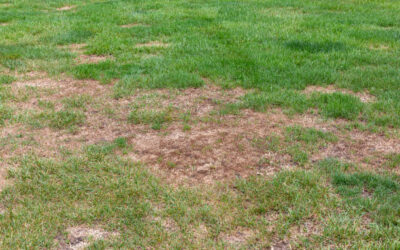
- Areas where grass is thinning or dying
- Soil that feels constantly soft or muddy
- Water collecting near your home’s foundation
- Mulch or gravel being displaced after rain
Even one of these signs is worth addressing. Ignoring it usually leads to larger and more expensive problems later.
Start with the Grade of Your Yard
One of the most common drainage issues comes down to grading.
If water is not moving away from your home, it is going to settle somewhere it shouldn’t.
A proper grade creates a gentle slope that directs water away from the foundation and toward areas where it can safely absorb or drain.
In some cases, small adjustments can make a big difference. In others, regrading sections of the yard may be needed to correct the flow of water.
This is one of the most important steps, because everything else builds on it.
Downspouts and Gutters Play a Bigger Role Than You Think
It is easy to focus only on the yard, but a large amount of water starts at the roof.
If downspouts are dumping water too close to the house, that water has nowhere to go except into the surrounding soil.
Extending downspouts or redirecting them to better drainage areas can immediately reduce pooling near the foundation.
This is one of the simplest fixes, but it is often overlooked.
When a French Drain Makes Sense
For areas that consistently hold water, a French drain can be one of the most effective solutions.
A French drain uses a gravel-filled trench and perforated pipe to redirect water away from problem areas. Instead of sitting on the surface, water is captured and moved underground to a more suitable location.
These are especially helpful in:
- Low spots in the yard
- Areas between properties where water collects
- Sections that never seem to dry out
When installed correctly, they solve the problem at the source instead of just managing the symptoms.
Dry Creek Beds and Drainage Swales
If you are looking for a solution that also improves the look of your yard, dry creek beds and swales are worth considering.
A dry creek bed is a shallow, rock-lined channel that guides water through your yard in a controlled way. During heavy rain, it carries water safely away. When dry, it looks like a natural landscape feature.
A swale is a broader, gently sloped channel that slows and redirects water.
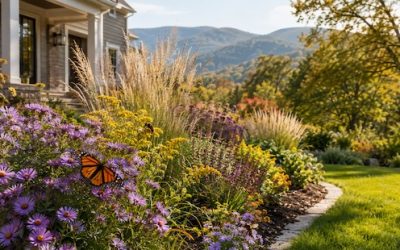
Both options are functional and can be designed to blend seamlessly into your landscape.
Improving Soil Drainage
In some cases, the issue is not just where water is going, but how well the soil absorbs it.
Clay-heavy soil can be improved over time by adding organic material such as compost. This helps break up compacted soil and allows water to move through more effectively.
Aeration can also help by creating small openings in the soil, allowing water and nutrients to reach deeper into the root system.
These are not overnight fixes, but they improve drainage gradually and support healthier grass.
Don’t Wait Until the Next Storm
One of the biggest mistakes homeowners make is waiting until the middle of summer to deal with drainage.
By that point:
- The ground is already saturated
- Storms are more intense
- Damage is already happening
Addressing drainage in the spring gives you time to correct issues before they become more difficult to manage.
What Proper Drainage Actually Does
Good drainage is not just about avoiding puddles.
It protects your foundation.
It keeps your lawn healthier.
It prevents erosion and landscape damage.
It makes your yard more usable after rain.
When water is moving the way it should, everything else in your landscape works better.
A Final Thought
At Jack’s Lawn Care & Landscaping, we help homeowners throughout Central Virginia identify and correct drainage issues before they turn into larger problems. Whether it’s grading, French drains, or improving how water moves across your property, we focus on solutions that actually work long-term.
If your yard struggled with standing water or runoff last season, now is the time to fix it before summer storms arrive.