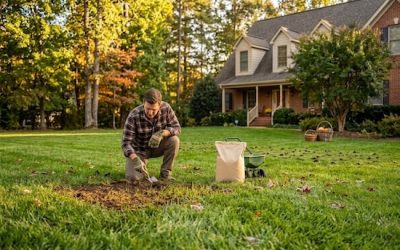

Fall in Charlottesville brings cooler temperatures, colorful trees, and eventually, a lot of leaves on the ground.
While fallen leaves are a normal part of the season, letting a heavy layer sit on your lawn for too long can create problems. Leaves can block sunlight, hold moisture against the grass, and create conditions that make it harder for your lawn to stay healthy.
The good news is that fall leaf cleanup doesn’t always mean raking every leaf into a giant pile. Depending on the amount of leaves on your property, you may be able to mulch some into the lawn, compost them, use them in landscape beds, or take advantage of Charlottesville’s seasonal leaf collection.
Here are some practical ways to manage leaves on your Charlottesville property this fall.
Don’t Let Thick Layers of Leaves Sit on Your Lawn
A few scattered leaves usually aren’t a problem. A thick layer is different.
According to Virginia Cooperative Extension, heavy leaf coverage can block sunlight from reaching your turf and trap moisture in the grass. That can reduce turf growth and increase the potential for lawn disease.
This is especially important once leaves become wet and begin sticking together.
Rather than waiting until nearly every leaf has fallen, keep up with cleanup throughout the season. Removing or mulching smaller amounts at a time is usually much easier than tackling a property covered in several weeks’ worth of wet, matted leaves.
Mulch Leaves When You Can
Not every leaf has to leave your property.
One of the easiest ways to deal with a light or moderate layer of leaves is to mow over them and chop them into smaller pieces.
Virginia Cooperative Extension reports that mulching deciduous leaves directly into turf can be an effective way to manage leaves without harming the lawn. Finely chopped leaves break down over time, allowing the organic material to remain on your property rather than being hauled away.
There is a limit, however.
If mowing leaves leaves behind a thick layer of shredded material that continues to cover the grass, you probably have too many leaves to mulch effectively at one time. Remove some of the excess and mulch what remains.
It’s also best to avoid mowing extremely wet leaves. Slightly moist leaves can help reduce dust, but leaves that are too wet may not chop well and can put additional strain on your mower.
Remove Sticks and Branches Before Mulching
Before running a mower through fallen leaves, take a quick walk around the property.
Remove sticks, branches, rocks, and other debris first.
This is an important safety step that also helps protect your mower. A rotary mower can handle leaves, but it isn’t designed to grind up branches and other large debris.
Fall storms and windy days can bring down more than leaves, so checking the lawn before you mow is worth the extra few minutes.
Put Some Leaves to Work in Your Landscape
Leaves can also be useful outside the lawn.
Shredded leaves can be composted or used as organic material around appropriate landscape areas. Charlottesville also recommends backyard composting as one option for managing yard waste.
If you have a compost pile, fallen leaves provide a readily available source of carbon-rich material.
Leaves used as mulch should generally be shredded rather than piled onto beds in thick layers. Whole leaves can mat together and interfere with the movement of air and water into the soil.
Pine needles are a little different. Virginia Cooperative Extension notes that they break down much more slowly than deciduous leaves, but their durability can make them useful as landscape mulch.
Keep Leaves Away From Storm Drains
When you’re blowing or raking leaves, pay attention to where they end up.
Leaves should not be pushed into storm drains, gutters, sidewalks, or travel lanes. Large amounts of leaves can obstruct drainage, particularly during periods of heavy fall rain.
The City of Charlottesville specifically instructs residents using its loose-leaf collection program not to block storm drains, fire hydrants, sidewalks, bike or vehicle travel areas, curb ramps, or crosswalks.
Keeping these areas clear is good practice even when you aren’t preparing leaves for city collection.
Know How Charlottesville Leaf Collection Works
If your property is within the City of Charlottesville, the City offers seasonal curbside collection of loose leaves beginning around late October.
The program uses vacuum trucks to collect leaves that residents rake to the curb. Collection schedules and instructions are updated seasonally, so check the City’s leaf collection information before putting leaves out.
The City asks residents to place loose leaves at the street edge without blocking storm drains, fire hydrants, sidewalks, crosswalks, or traffic.
Leaves collected through the program are taken to a local farm for composting.
Keep in mind that Charlottesville does not provide regular curbside collection of general landscape and yard waste outside of its seasonal leaf collection program. Other yard waste can be composted at home, taken to an appropriate drop-off location, or handled through a private service.
Don’t Forget Landscape Beds and Hardscapes
Leaf cleanup isn’t only about the lawn.
Leaves accumulate around shrubs, along fences, under decks, in corners, on patios, and around outdoor equipment. They can also collect on walkways and driveways, where wet leaves may become slippery.
A thorough fall property cleanup should include:
- Lawn areas
- Landscape beds
- Walkways
- Driveways
- Patios and outdoor living areas
- Areas around shrubs and fences
- Drainage areas and storm drains
Cleaning these areas periodically throughout the season can keep the property looking better and make the final cleanup much easier.
Time Your Final Cleanup Carefully
One of the frustrating parts of fall cleanup is clearing the entire property only to have another layer of leaves on the ground two days later.
Instead of treating leaf removal as a one-time project, think of it as a process.
Early in the season, mulch manageable amounts of leaves when possible and clean up areas where leaves accumulate heavily.
As leaf drop increases, remove larger amounts before they become wet and matted.
Then plan a more thorough cleanup once most of your trees have dropped their leaves.
That approach keeps the property manageable without repeatedly doing the same major cleanup.
Give Your Property a Clean Start Before Winter
Fall cleanup is about more than appearance. Removing heavy leaf buildup and accumulated debris helps prepare lawns and landscaped areas for the colder months ahead.
It’s also a good opportunity to take care of other seasonal property needs before winter arrives.
Jack’s Lawn Care & Landscaping provides professional property cleanup and lawn care services in Charlottesville and the surrounding area. Our property cleanup services include yard and debris cleanup, brush clearing, storm cleanup, and other seasonal cleanup needs.
Instead of spending your fall weekends raking, blowing, piling, and hauling leaves, let our team help get your property cleaned up and ready for winter.
Contact Jack’s Lawn Care & Landscaping to learn more about fall property cleanup in Charlottesville.